Adding an IP VPN On-Demand connection to Azure
With Lumen® IP VPN On‑Demand, you can use Lumen Connect℠ to add a connection from a Lumen VRF to Microsoft Azure. To add the connection, you'll need an ExpressRoute service key from Microsoft (which you receive when you create an ExpressRoute circuit using the Azure portal). Be sure to have that information handy to type in (or copy/paste).
There are three steps to successfully add and use an IP VPN On‑Demand connection to Azure:
Note: You can only use a service key that isn't provisioned and has no peerings. The ExpressRoute service key is unique and different from the service key for your Azure cloud service.
Step 1: Create the ExpressRoute circuit
To create an ExpressRoute circuit in the Azure portal:
- Go to the Azure portal, sign in, and create an ExpressRoute circuit using CenturyLink Cloud Connect.
- Copy the Service key. You will paste this when creating the On-Demand connection.
- Verify the Azure portal shows Not provisioned in the Provider status field and Enabled in the Circuit status field. Learn more about ExpressRoute circuit status
Step 2: Add the connection in Lumen Connect
To add the IP VPN On‑Demand connection:
- Using the left menu, click Services, then click Add Services.
Lumen Connect shows services you can add with the Lumen digital experience.
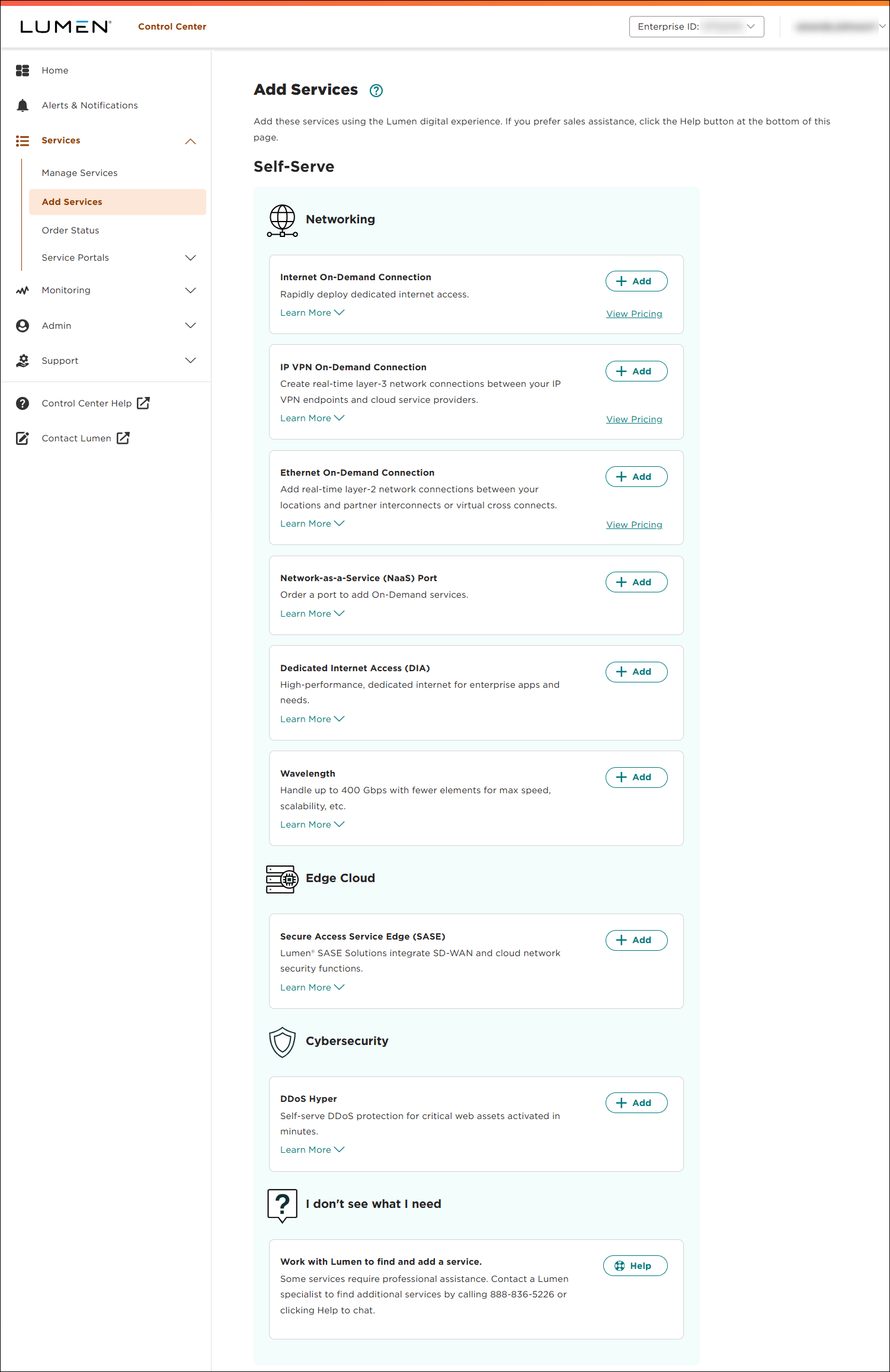
- Click + Add for IP VPN On-Demand.
- From the Customer ID and Billing Account Number lists, select the customer number and billing account number you want to add IP VPN On-Demand to.
Lumen Connect fills in the VRF inventory based on the customer ID and billing account number you selected.
- In the Service Nickname field, type a name for the connection you're creating. (Be sure to use something memorable. This name will appear on your invoice.)
- In the From Location (Select Your VRF) section, select or create a VRF for the other end of your connection.
- Select the VRF to use for the other end of your connection. Click View Details for a VRF to view the VRF's routes.
- Click Create New, then type a description for the new VRF in the New VRF Description field. Lumen Connect will create the VRF and activate your VPN service once you create your connection.
- Select the VRF to use for the other end of your connection. Click View Details for a VRF to view the VRF's routes.
- From the Cloud Provider list, select Azure.
- In the ExpressRoute Service Key field, type or copy and paste your ExpressRoute service key provided by Microsoft. (Note: You can only use a service key that isn't provisioned and has no peerings.)
Once you fill in the ExpressRoute service key, Lumen Connect retrieves connection information from Microsoft and fills in the on-ramp information.
- Click CONTINUE.
- Use the Billing Method buttons to select whether you want monthly or hourly billing for the connection, then select the bandwidth for the connection. Bandwidth options are determined by the destination (to location).
- Click Continue.
- In the Select Additional Settings section, fill in the additional details for the connection. (Lumen Connect automatically makes the connection private and sets 12076 as the AS number for Azure.)
- Select the Internet Protocol Version you want to use.
- Select whether this is a primary or backup connection.
- In the IPv4 Routing Option field, select the radio button for the routing option you want to use for the connection. Learn more about routing options for an IP VPN connection
- Use the buttons to select whether you want to advertise default routes (for both IPv4 and IPv6 if you selected both Internet Protocol versions).
- Select the Internet Protocol Version you want to use.
- Click CONTINUE.
- Review the order information and correct any missing or invalid selections.
Enter an Offer Code if you have one, then click Apply.
Click Submit Order.
Lumen Connect creates the connection request, sets it to Pending Activation, and routes you to the Services tab so you can monitor its status. To see status updates, click . Once Lumen assigns the permanent VRF (within five minutes), the connection changes to Active status.
Step 3: Finish provisioning the ExpressRoute circuit with Azure
To finish provisioning the ExpressRoute circuit:
- Once the connection is in Active status, view the details for the information you need to take back to the Azure portal to finish setting up the connection and creating the Azure private peering.
- Complete the provisioning of your ExpressRoute circuit in the Azure portal.
- Once Azure provisions the ExpressRoute circuit, the Provider Status field shows Provisioned.
Demo video