Adding a connection from a Multi-Cloud Gateway to Azure
Use Lumen® Ethernet Fabric Connect to add a hosted cloud connection from a Lumen® Multi-Cloud Gateway (from your list of available gateways) to Microsoft Azure using Lumen Connect®. To add the connection, you'll need an ExpressRoute service key from Microsoft (which you receive when you create an ExpressRoute circuit using the Azure portal). Be sure to have that information handy to type in (or copy/paste).
Microsoft Azure requires two EVCs to make the connection. You will need two Multi-Cloud Gateway Interfaces to create two connections. After adding the first connection, click the Create Secondary Connection button to create the second connection.
Note: You must add two interfaces to your Multi-Cloud Gateway before adding an Azure Fabric Connection to it. You'll use one interface for the primary connection and one for the secondary connection.
There are three steps to successfully add and use a hosted cloud connection from a Multi-Cloud Gateway to Azure:
Note: You can only use a service key that isn't assigned to an active connection. The ExpressRoute service key is a unique service key and is different from the service key for your cloud service from Azure.
Step 1: Create the ExpressRoute circuit
To create an ExpressRoute circuit in the Azure portal:
- Go to the Azure portal, sign in, and create an ExpressRoute or ExpressRoute Metro circuit (depending on your location). Lumen is called CenturyLink Cloud Connect in the Azure portal.
- Copy the Service key. You will paste this when creating the On-Demand connection.
- Verify the Azure portal shows Not provisioned in the Provider status field and Enabled in the Circuit status field. Learn more about ExpressRoute circuit status
Step 2: Add the connection in Lumen Connect
To add the Ethernet Fabric Connect:
- Using the left menu, click Services, then click Add Services.
Lumen Connect shows services you can add with the Lumen digital experience.
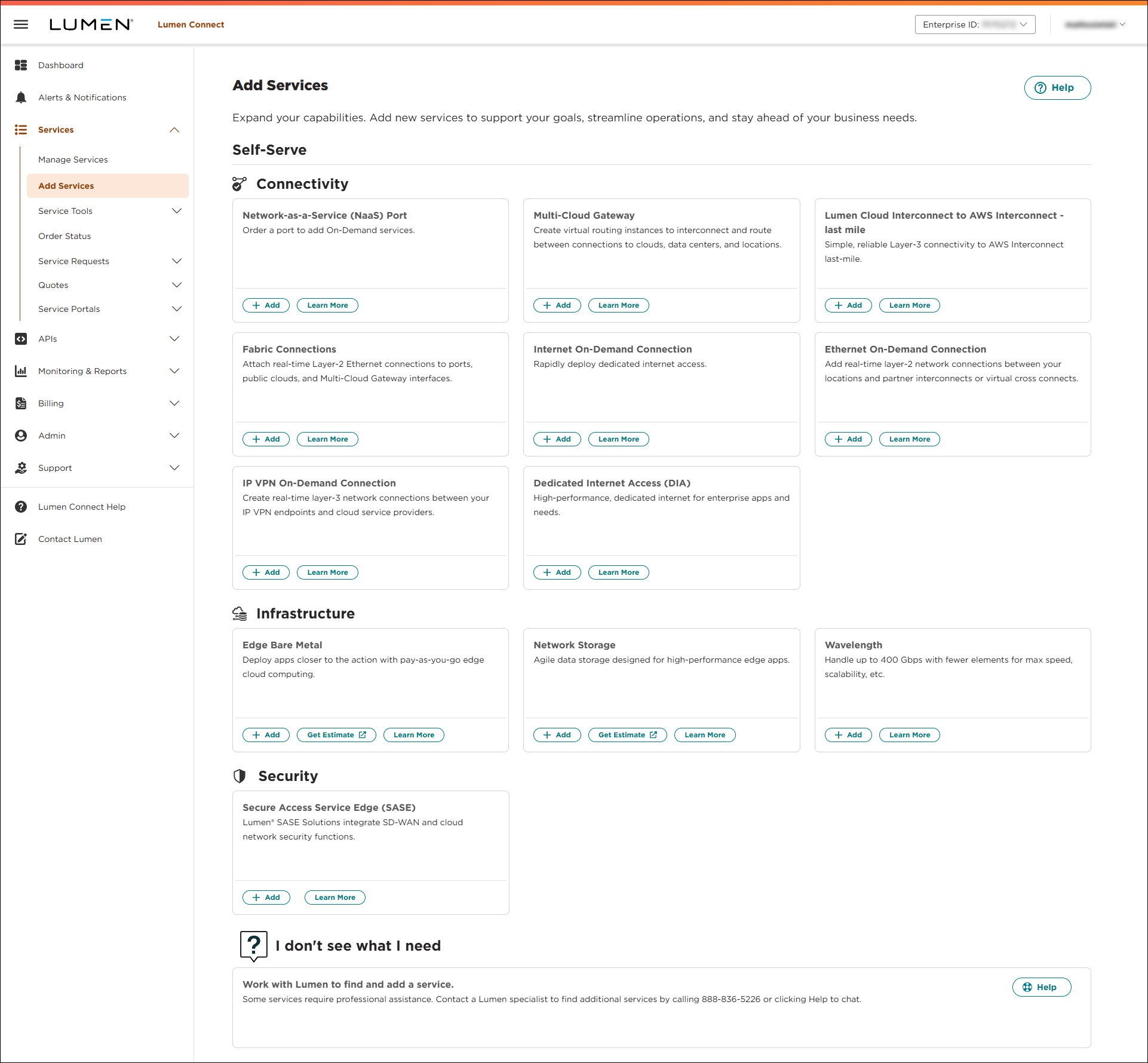
- Click + Add for Ethernet Fabric Connect.
- Select a customer and billing account, then click Continue.
Not sure which billing account number to select? Consult your accounting department for help selecting a billing account number.
Note: If you can’t click on anything, you’ll need to contact your Lumen Connect system administrator to get Fabric & On-Demand Services permissions.
- In the Service Nickname field, type a name for the connection you're creating. (Be sure to use something memorable. This name will appear on your invoice and in your list of services.)
- Use the Service Description field to record additional information about the connection.
- In the Ethernet Fabric Connect Type field, select Hosted Cloud Ethernet.
- In the End Points field, select Multi-Cloud Gateway to Cloud.
- Select the Source Multi-Cloud Gateway from the list, then select the Source Multi-Cloud Gateway Interface.
- Select Azure from the Destination Cloud Provider list.
- In the ExpressRoute Service Key field, type your ExpressRoute Service Key from Azure.
- Select the Azure destination endpoint from the Cloud On-Ramp list.
- Click Continue.
- In the Class of Service field, select whether you want Basic or Dedicated. (Dedicated offers higher availability SLAs and allows you to increase traffic prioritization for your EVC.)
- Basic (best effort): The service may be oversubscribed on the Lumen network.
- Dedicated (real-time): The quality of service offering with the highest priority on the Lumen network. In addition, Lumen reserves bandwidth for this EVC across the network on each ring it touches. Once it is dedicated to you, that bandwidth (and the corresponding CE-VLANs) sits in reserve regardless of how much bandwidth you use.
- Basic (best effort): The service may be oversubscribed on the Lumen network.
- Use the Billing Method buttons to select whether you want monthly or hourly billing for the connection.
- In the Select Bandwidth field, select the bandwidth for the connection. Bandwidth options vary based on selected locations and cloud service providers. The maximum bandwidth available is the highest matching bandwidth at both locations.
- Click Continue.
- Review your connection information, then click Submit.
Lumen Connect creates the connection request and places it in the Pending Activation status.
- Click Create Secondary Connection.
- Select the other interface you created for the Azure connection.
- Type the ExpressRoute Service Key and select the Cloud On-Ramp.
- Click Continue.
- Repeat steps 14 through 17.
Step 3: Finish provisioning the ExpressRoute circuit with Azure
To finish provisioning the ExpressRoute circuit:
- Once the connection is in Active status, view the details for the information you need to take back to the Azure portal to finish setting up the connection and creating the Azure private peering.
- Complete the provisioning of your ExpressRoute circuit in the Azure portal.
- Once Azure provisions the ExpressRoute circuit, the Provider Status field shows Provisioned.



